Understanding Statistics: From Spotify Wrapped to GCSE Success
Have you ever wondered how your phone knows which songs you like? Or how scientists decide if a new medicine works? The answer is statistics. This is the science of collecting and looking at numbers to find patterns. We use statistics every single day, even when we don’t realize it. It helps us turn messy piles of information into clear stories that make sense. From sports scores to weather reports, these numbers guide our world.
Learning about statistics is like gaining a superpower. It helps you see the truth behind the news and makes you a smarter shopper. In 2026, data is everywhere, so understanding it is more important than ever. Whether you are a student or just curious, knowing how to read data is a vital skill. It’s not just about boring math; it’s about understanding people, nature, and the future. Let’s explore how this amazing field works in our lives!
Why Spotify Statistics are So Much Fun
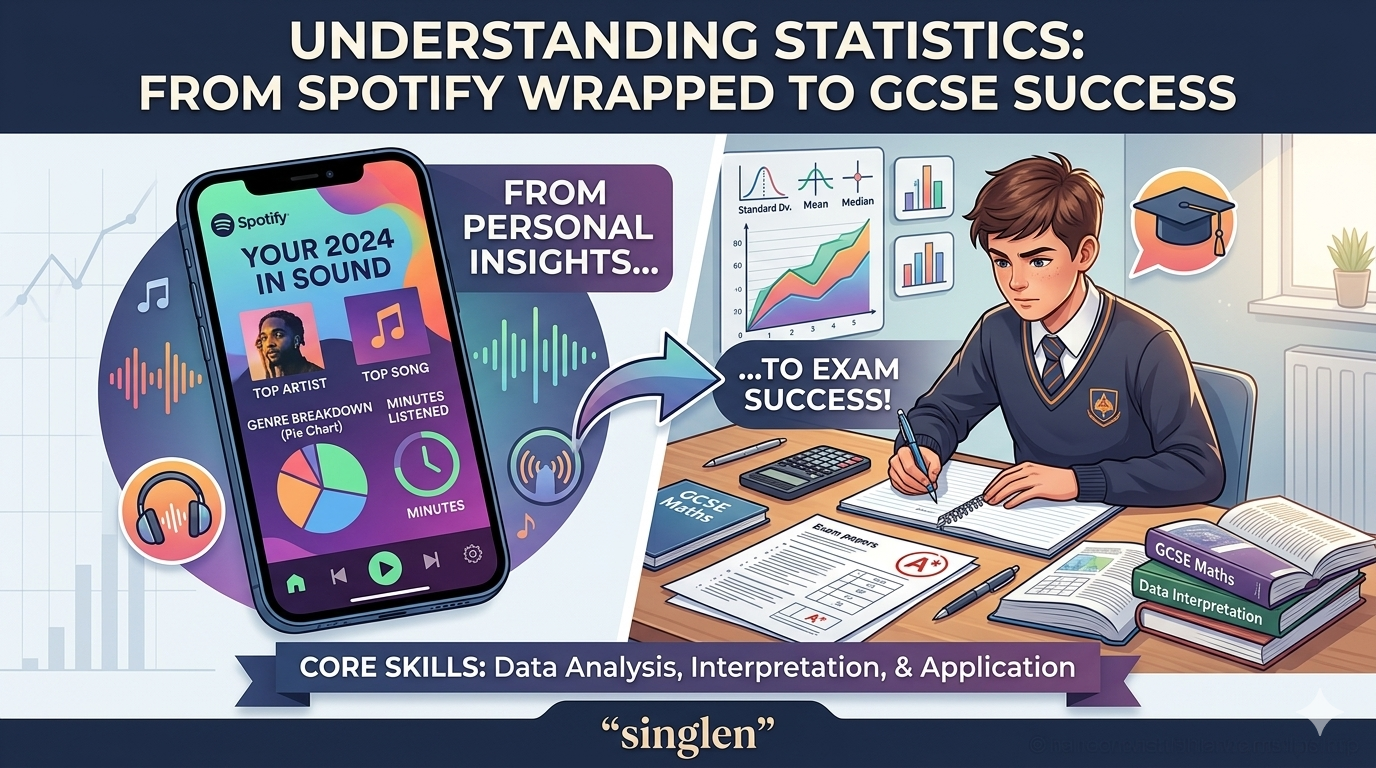
Every year, millions of people wait for their “Spotify Wrapped.” This is a perfect example of spotify statistics in action. The app tracks every song you play and every artist you love. Then, it uses those statistics to show you a map of your musical taste. It can tell you if you were in the top 1% of fans for a specific singer. This makes data feel personal and exciting rather than just cold numbers.
Looking at your spotify statistics helps you learn about yourself. Maybe you didn’t realize you listened to 500 hours of lo-fi beats while studying! These numbers tell a story about your year and your moods. Companies use this data to suggest new music you might enjoy. It is a smart way to use information to make your life more fun. It proves that data isn’t just for scientists; it’s for music lovers too!
Aced the Test: What is GCSE Statistics?
If you are a student in the UK, you might take a special subject called gcse statistics. This course teaches you how to collect and display data properly. You learn how to make clear graphs and calculate averages. Taking gcse statistics is a great choice because it helps with other subjects like geography and science. It gives you the tools to analyze the world around you with precision.
In your gcse statistics exam, you will learn about probability and how to spot bias. Bias is when data is unfair or missing important parts. By learning these skills, you become a better thinker. You won’t just believe everything you read online. Instead, you will ask, “Where did these numbers come from?” This is a key part of being a smart citizen in the modern world. It’s a very practical and useful subject for any career.
Descriptive Statistics: Painting a Picture
When we want to summarize a big group of data, we use descriptive statistics. Think of it like taking a long book and writing a short summary. It doesn’t try to guess anything new; it just tells you what is already there. For example, if you measure the height of everyone in your class, the “average” height is a type of descriptive statistics. It gives you a quick snapshot of the whole group.
We use descriptive statistics to find the middle, the most common, and the spread of numbers. The most famous parts are the mean, median, and mode. These tools help us see the “big picture” without getting lost in every tiny detail. If a teacher tells you the average grade was a B, they are using these tools. It makes huge amounts of info easy to understand at a single glance.
Inferential Statistics: Making Smart Guesses
While descriptive stats tell us what happened, inferential statistics help us guess what will happen next. It allows scientists to take a small group of people and make a prediction about everyone. For instance, if you test a new snack on 100 kids, you use inferential statistics to see if all kids will like it. It is a way of “inferring” or guessing the truth based on a sample.
This type of statistics is very important for making big decisions. Doctors use it to see if a vaccine is safe for the whole world. Politicians use it to guess who might win an election. It involves a bit more math and logic, but it is incredibly powerful. Without inferential statistics, we wouldn’t be able to plan for the future. It helps us move from “I know this” to “I think this will happen.”
Euromillions Statistics: The Science of Luck
Many people play the lottery and look at euromillions statistics to pick their numbers. They check which numbers appear the most often, which are called “hot numbers.” They also look for “cold numbers” that haven’t appeared in a while. While every draw is random, these statistics are fun to track. They show us how patterns emerge over hundreds of different games.
It is important to remember that euromillions statistics can’t actually predict the future. Since each draw is a new start, the “hot” numbers don’t have a better chance of winning. However, looking at the data helps people feel more involved in the game. It’s a great way to practice looking at frequency and probability. Just remember to play for fun and not rely only on the numbers to win a fortune!
Famous Figures in the World of Statistics
| Name | Contribution | Era | Real-World Impact |
| Florence Nightingale | Used charts to save soldiers | 1850s | Improved hospital hygiene |
| Karl Pearson | Created “Correlation” math | 1890s | Helped link two different data sets |
| Gertrude Cox | Experimental design | 1940s | Organized how we do research |
| John Tukey | Created “Box Plots” | 1970s | Made data easy to see visually |
| Sir David Spiegelhalter | Risk communication | 2000s | Explained COVID stats to the public |
How Statistics Helps the Environment
One of the most important uses for statistics today is saving our planet. Scientists collect data on ocean temperatures and forest sizes. They use these statistics to show how the Earth is changing over time. By looking at these numbers, we can see if our efforts to stop pollution are working. It provides the “proof” that leaders need to pass new laws to protect nature.
Without accurate statistics, we would just be guessing about climate change. Data helps us track which animals are in danger and which forests need more trees. It allows us to use our resources wisely. When we see a graph showing plastic in the ocean going down, we know we are doing a good job. Numbers are the language of the Earth, and they help us be better guardians of our home.
Statistics in Sports: Winning with Data
If you love football or basketball, you are seeing statistics in every game. Teams now hire “data analysts” to help them win. They track how far a player runs and where they usually shoot from. These statistics help coaches decide who should play and what plays to run. It has changed sports from being just about talent to being about smart data.
In baseball, this is often called “Moneyball.” It means finding players who might not look like stars but have great statistics. By using data, even teams with less money can win championships. Fans also love it! They check “Expected Goals” (xG) or “Points Per Game” to argue about who is the best. It adds a whole new layer of fun to being a sports fan in 2026.
The Ethics of Data: Staying Trustworthy
Not all statistics are used for good. Sometimes, people “cherry-pick” data. This means they only show the numbers that make them look good and hide the bad ones. As a researcher, you must be honest. This is part of the E-E-A-T (Expertise, Authoritativeness, and Trustworthiness) guidelines. To be a trusted expert, you must show all the data, even if it’s not what you expected.
Being careful with statistics means checking your sources. Always ask who paid for the study and how many people were asked. If a chocolate company says “9 out of 10 people love chocolate,” they might be biased! Trustworthy data comes from fair testing and clear reporting. As you learn more, you will get better at spotting “fake news” and finding the real truth behind the numbers.
Conclusion
In conclusion, statistics is the key to understanding our complex world. Whether you are checking your spotify statistics or studying for your gcse statistics exam, you are using a vital skill. It helps us describe the past and predict the future. From the fun of the lottery to the seriousness of saving the planet, numbers are our best friends. They give us clarity in a world full of noise and opinions.
I encourage you to look at the numbers around you today. Check your screen time stats or look at the weather forecast. Try to see the “story” the data is trying to tell you. By becoming comfortable with statistics, you are preparing yourself for a successful future. The more you know, the better decisions you will make. Happy counting, and may the odds always be in your favor!
FAQs
1. What is the difference between mean and median?
The mean is the average (all numbers added and divided). The median is the exact middle number when they are all lined up in order.
2. Can statistics lie?
Numbers don’t lie, but people can use them in confusing ways! Always look at the source and the sample size to find the truth.
3. Is GCSE statistics hard?
It can be tricky, but it is very logical. If you like puzzles and real-world problems, you will likely find it very interesting and fun.
4. Why does Spotify Wrapped come out in December?
Spotify uses statistics from January to November to create your summary. They release it in December so people can share their music taste for the year.
5. How do inferential statistics help in medicine?
They allow doctors to test a medicine on a small group and calculate the probability that it will work for everyone else safely.
6. What is a “sample size” in statistics?
The sample size is the number of people or items you are testing. Usually, a bigger sample size means your results are more accurate.